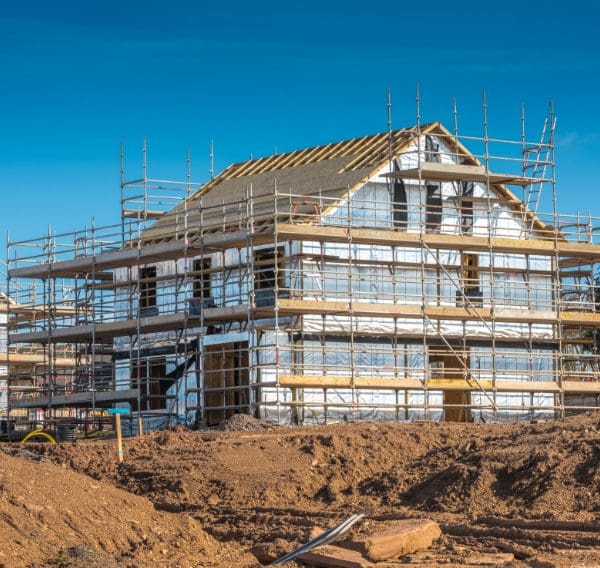
A common term in the context of residential property development is “Golden Brick”, which determines the point at which a sale stops being a sale of bare land (which can be subject to VAT) and becomes the sale of a partly constructed dwelling (which can be zero-rated for VAT).
This mechanism can be important where the alternative is not only an additional 20% payable on top of a purchase price, but also an increased Land & Buildings Transaction Tax liability (assuming the purchaser does not have the benefit of any other LBTT reliefs). Such costs not being subject to VAT is important for cashflow purposes, particularly where the purchaser may not be VAT registered.
But what happens where there is a dispute as to when Golden Brick stage is reached? This arose recently where a housing association client queried with us the reference in the contract to the stage the development works required to reach, to trigger completion of the purchase. So where can professionals in the housing sector go to check the precise definition? The answer to that is less clear than you would think.
There is no statutory definition to rely on and you will be hard pressed to find much online guidance from HMRC. There have however been a few tax tribunal decisions that indirectly address the issue. None define the phrase directly, but they deal with the underlying legal test: when is a building sufficiently under construction for the zero-rating of a new dwelling under Schedule 8 Group 5 of the VAT Act 1994 to apply?
The Golden Brick stage is reached when the building is clearly under construction and has progressed beyond foundation level. HMRC practice generally treats the following as sufficient:
- Foundations completed
- Construction started above the foundations
- Usually the first course of brickwork or equivalent wall structure above the damp-proof course
Once this point is reached, the property is considered a partially completed dwelling, not bare land.
Where HMRC have challenged a Golden Brick transaction, the dispute usually turns on evidence of the stage reached at completion, e.g. structural engineer certificates, architect stage reports and site photographs or aerial imagery. Tribunals essentially ask: Was there a building under construction at the time the land was supplied?
The position may not always be sufficiently clear. You should therefore ensure that you take both legal and tax advice on the implications and that your contract is robust enough to cover off the risk of a potential challenge by HMRC.
For further information on the Golden Brick requirements, please contact Craig Smith at cjs@tcyoung.co.uk or 0131 220 7128